NAVAIR Engineering Intern
Fleet Readiness Center Southeast (FRCSE) — F-5 Structures Fleet Support Team
Overview
The Naval Air Systems Command (NAVAIR) provides full life-cycle support for all naval aircraft, weapons, and systems used by the U.S. Navy and Marine Corps. My internship was located at the Fleet Readiness Center Southeast (FRCSE), one of NAVAIR's major industrial facilities, whose core mission is to perform deep-level maintenance, repair, and overhaul (MRO) on naval aircraft and their components.
I was placed on the F-5 Structures Fleet Support Team (FST), which serves as the in-service structural engineering authority for the entire F-5 aggressor aircraft fleet — used by both naval and Marine Corps advisory units. The team's primary role is to provide urgent engineering guidance for repairs and inspections, conduct Engineering Investigations into structural failures, and perform structural analysis for ongoing issues.
F-5 Structures Fleet Support
My routine engineering output provided direct fleet support across the F-5 platform. I successfully authored and completed over eight high-priority Technical Engineering Instructions (TEIs) and numerous Structural Analyses (SAs).
These documents formalized repair procedures for critical areas such as the Leading Edge Extension (LEX) and the vertical and horizontal stabilizers — components essential to the aircraft's structural integrity and in-flight maneuverability.
Each TEI required maintaining a constant balance between fleet readiness and safety, as these instructions authorized repairs to primary load-bearing components where structural failure could compromise airworthiness and result in the loss of life.
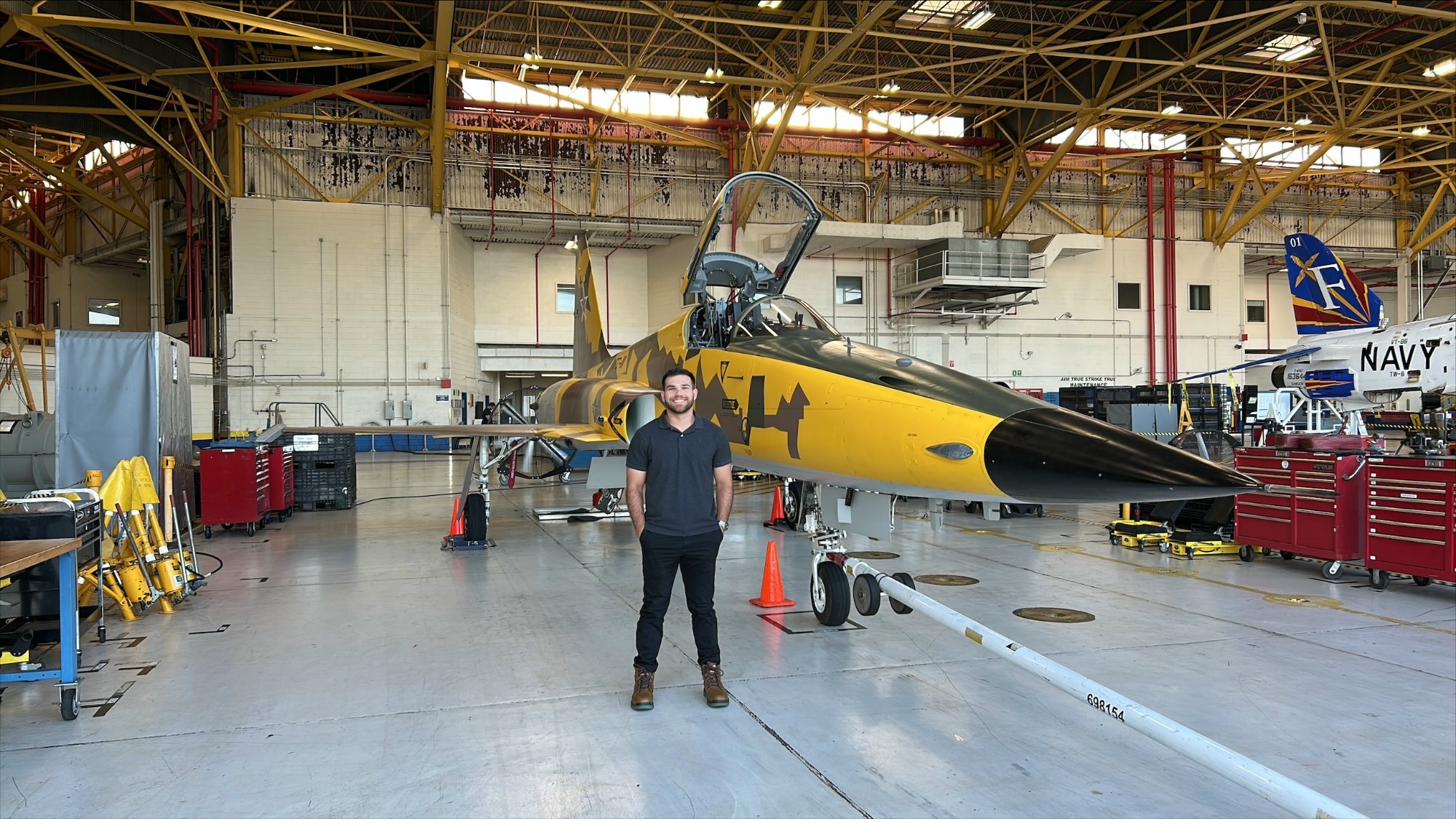
// With the F-5 Tiger II at FRCSE, Jacksonville FL
Engineering Investigation — Cracked Longeron Support
Phase 1 — Removal & Documentation
I developed the Technical Engineering Instruction (TEI) and Structural Analysis (SA) for the safe, non-destructive removal of the component, based on a comprehensive review of existing technical data and analogous maintenance procedures. I then supervised FRCSE artisans during the removal and performed precise dimensional measurements to inform manufacturing of the replacement part.
Phase 2 — Root Cause Analysis
I led the root cause failure investigation in the materials lab, working alongside materials scientists. Using a Scanning Electron Microscope (SEM), we examined the grain structure of the failed part. Combined with conductivity and Rockwell hardness tests, the investigation definitively determined that the part failed due to a combination of overload and fatigue failure.
Phase 3 — Final Report
I compiled the final analysis report, providing critical data to guide the design of future replacement parts and establish long-term repair procedures for the fleet.
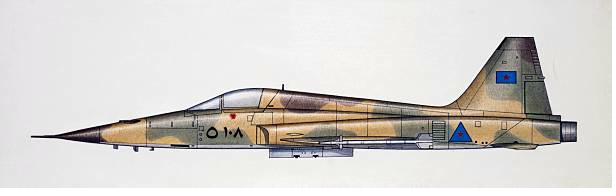
// F-5 Tiger II — primary aircraft platform of the F-5 FST